I've been toying with writing an article for a while and thought i would write a cool simple way to explain IP addresses in a way that everyone should be able to understand.
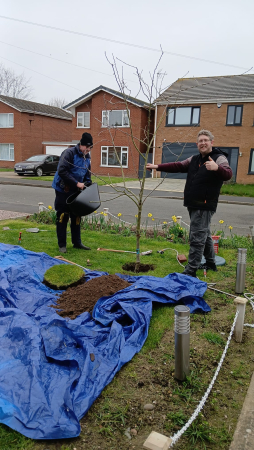
You will notice the headline image of this article is a row of houses with a camper van outside. This will feed into, and help explain, IP addresses in a more visual way.
What is an IP address?
The simplest way to understand what an IP address is, is think of your house address its, in most cases, made up of a house number, street name, county and postcode. An IP address is similar, its like and address for a computer or server. Everyone who visits a website gets given an IP address.
This IP address will more than likely be dynamic, simply meaning it changes after so many days. Static IP addresses, are like a house address, the address of the house does not change, simply the occupants change over. These are typically used by computers / servers where a there IP address never changes. A dynamic IP address is more like a camper van as it moves about the country its location / address changes. One day it could be in Scotland and the other in England.
How does your computer know where to send you when you visit a website?
Well, for example, a simple way to think of this is, when you write a letter, but don't know the address, you might look it up on Google, or in a address book. Computers work in a similar way, they take an address you enter into the address bar, and using a central address register, like a big address book, lookup where the website exists on the internet and then take you to that address. These big central address books are often referred to as DNS (Domain Name System). This central address book contains a big list of names you type in for websites and the computer address. This is a static IP address like a house address and not a campervan address which is dynamic. Meaning it changes.
Where do all these websites live and can websites share the same address?
Websites usually reside on big computers inside a building with other computers in what's called a data centre. The way to think about this is a row of houses in a housing estate. There may be many houses down a street, each one represents a computer also referred to as a server. Think of a server as a very powerful computer but like a house, it may have cameras, a security system and access to the outside world maybe limited. Like people who live on housing estates where only access is through a gated entrance.
Many websites may live on one computer like a HMO in a house. Certain people know that a house down the street maybe a HMO, with multiple different people living in the same house. This is much like a server where multiple websites reside. The beauty of this is it keeps costs down, like with a HMO other things are included in renting a room like bills etc such as water and electric.
How does a computer / server tell the difference between multiple websites on the same static IP address?
Well, once the computer has looked up the correct IP address / house address for the website you want to visit. The web browser, sends to the redirected website, the website name in the address bar, the server then looks up in the HMO where a particular room where a person is. For example, when you visit this website, think of this website being a room in a HMO. It knows that, much like, an address book. kevarni.co.uk lives in say room 1 and giddysharp.co.uk lives in room 2 of the HMO and many other sites exist in the same HMO. So this look, with the website address, you entered in the browser knows which room or set of code files to load for each room / website. Meaning that in a HMO style way every website lives in the same building but in different rooms. Each of these rooms will come with different features and bells & whistles. Like a on suite shower, basic kitchen facilities.
Why don't each website has its own unique IP address?
Well, the simple answer is, imagine, a small island off the English coast, there is only so much room for houses, this is the same with websites. There aren't enough traditional IP addresses (v4) for every house / website on the internet.
Conclusion
Remember static IP addresses are usually for businesses or hosting websites. Dynamic campervan style addresses, where they may change, are usually for people who are visiting websites, using apps, streaming or gaming. They still allow you to access a website even if you are on the move.